Showing posts with label Abraham Lincoln. Show all posts

Saturday, August 15, 2026

Book Review: Boss Lincoln, by Matthew Pinsker


Lincoln the Emancipator.

Lincoln the Liberator.

Lincoln the Martyr.

Lincoln the Republican.

Lincoln the Democrat.

Lincoln the Colonizer.

Lincoln the Traitor.

Lincoln the Southerner, Atheist, Compromiser, Racist, etc.

Our beloved, bellowed, hallowed, and hated Sixteenth President has endured a host of labels, from contemporaries to modern luminaries seeking to crystallize his legacy, for better or for the worse.

One of the most consequential, if not greatest presidents in our history, it’s no surprise that more books get published exploring the man, the myth, and the manifest destiny of this seminal figure of American history than any other.

Lincoln the politician is certainly well-known and well-read. If you want to make a difference in government, you have to get elected. Lincoln understood this obvious yet deceptively simple principle. Politics is the game if you want policy to hold your name.

Some negatives about Lincoln come from opportunists, some within his own party. Many have lingered from critical revisionists who have cast shade on his place in the presidential pantheon.

Yet one of the latest books written describing the inner and outer workings of this commanding president, one of his most plenary, extensive roles throughout his political life was: Lincoln the Party Organizer, Lincoln the Hoss, or, to quote Matthew Pinsker’s latest book:

Boss Lincoln

Taking a unique, quieter biographical tour (and tour de force) of our nation’s greatest President through the view of his political workings, Matthew Pinsker reveals to us the quiet yet profound underpinnings of Lincoln the party man, who wanted to broker then build a movement, starting with his adopted state of Illinois to the national party campaigns, that would end slavery while also making room for internal improvements and ending the Jacksonian “democracy” hold on American politics.

Lincoln was a boss, a political operative who knew that you had to pick your fights to win, and that he was willing to win every fight.

Pinsker’s work is a godsend also because, through reviewing the Illinois rail-splitter turned Whig turned anti-Nebraska fusionist turned Republican turned 16th President, Pinsker documents extensively Lincoln’s true committed principles to ending slavery, despite craven revisionists attempt to recast his commitment to “All Men Are Created Equal” as a mere cynical afterthought.

He wasn’t just a mere moderator interested in stopping its spread. From early in his political career, who was committed to a nation that lived up to its founding creeds. Unlike the cynical portrayals of detractors and woke scolds, Lincoln was a measured, mature patriot, one who wanted to end slavery, but recognized the difficult political terrain determined to prevent that new birth of freedom.

Sadly, in Lincoln’s day, many voters were starting to sour on the fundamental premise—and promise—of the Declaration of Independence, that indeed All Men Are Created Equal. What sense did it make for the American public, and its government, to deprive men enslaved throughout the country of those same rights?

Pinsker’s work takes a look at Lincoln’s local, even arcane or rudimentary attention to politics: how Lincoln organized county and state conventions; how he networked with former and current lawmakers to hone and polish a clear and convincing political platform for the Whigs, then the anti-Nebraska factions oppose the spread of slavery via popular sovereignty, and finally the Republican Party. From the early 1840s, when he rode circuit as a federal attorney, then ran and served one term in Congress, Lincoln was committed to freedom under law before God for all men.

Pinsker also provides in depth review and reporting on the legislative horse-trading that took place to get allied US Senators elected for Illinois. Lincoln was a prime candidate in 1854 as well as 1858. He was enough of a team player, however, that he pulled strings and twisted arms for a decent anti-slavery Democrat (later Republican) Lyman Trumbull elected.

It’s important to remember, as Pinsker reminds his readers, that state legislators, not American voters, elected US Senators until passage of the 17th Amendment. In order for a party to get their man, the state convention would nominate their preferred candidate—as a directive to legislators once they sat for their first legislative session. Party bosses and grassroots paid close attention to legislative races, ensuring that they could get a necessary majority across both houses and get their man into the US Senate seat.


Pinsker gives us a glimpse into vote-counting, electioneering, and the all-too-frequent fear that non-citizens would vote in key elections to turn. Pinsker’s commentary on Election 1858 was particularly revealing, detailing how Stephen Douglas, the incumbent Democratic US Senator facing re-election, was possibly positioning Irish immigrants from Chicago (who mostly voted Democratic) to move into Central and Southern Illinois, to help decide key state legislative races.

Illinois’ election integrity issues were not strong then (just as they fail now, certainly), and faithful Republican Bossman Lincoln warned state party leaders and local precinct captains to watch out for illegal voting! The issue which dominates our politics today consumed the party faithful of all parties over a century and a half ago, too!

Lincoln followed voter rolls, kept tabs on who voted which way from election to election, too. He worked with statewide maps, working hard to ensure Republican majorities in the state legislature come Election Day, 1858.

Lincoln’s commitment not just to principle, but to practical application and pragmatic approach, are underappreciated as well as commendable. It’s no surprise that this “Dark Horse” candidate in the 1860 GOP Convention at the Wigwam scored an upset nomination victory, then took the White House in November For decades, Lincoln played an effective team player, supporting other presidential aspirants with due diligence during his political journey from Whig to Republican, from Henry Clay to John C. Fremont, with no shabby interest in his own well-being or ambition. Throughout his account, Pinsker recognizes Lincoln’s ambition, yet even the failed legislative candidate, House candidate, and US Senate candidate conceded that despite his political will, the way to higher office didn’t seem manifest, until it did, at just the right time.

Pinsker’s review of Lincoln’s wise yet subtle political calculations, from assembling his cabinet, to assigning military duties and appointing generals, reveal how the political calculations of a small-time party-boss from Sangamon County (a county which he would never win as President) had forged him into the necessary, essential, and irreplaceable leader who doggedly fought to keep the Union together precisely by focusing on the moral and political necessity of abolishing slavery.

Pinsker enlivens an otherwise dry, oft-ignored academic subject. Pinsker reviews and responds to the marginal political notes and subtle posturing and policy-making of Lincoln in his early days, then weaves together a compelling account which enhances the myth of the man, while also showing the humble means of a rail-splitting railroad attorney who had sustained multiple political losses would build a strong and enduring Republican Party and become the 16th President of the United States.

If the machine of politics interests you, this book is a “boss” of a read.

If you enjoyed Spielberg’s film Lincoln, you will definitely enjoy reading Boss Lincoln.

Even if you care little or know nothing about politics, Pinsker’s detailed account of Lincoln the Boss will guide you without losing your way.

Sunday, December 2, 2018

Trump vs. Chief Justice John Roberts: Trump is in the Right


President Trump recently slammed the “Obama Judge” who stuck down his order to block the mobile mob along (which media have called “the migrant caravan) the United States’ southern border. In a rare move, United States Supreme Court Justice John Roberts rebuked the President for his criticism of the federal judiciary:

"We do not have Obama judges or Trump judges, Bush judges or Clinton judges. What we have is an extraordinary group of dedicated judges doing their level best to do equal right to those appearing before them. That independent judiciary is something we should all be thankful for."

It’s understandable that the Chief Justice wants to counter any disparaging condemnation that independent judges have gone rogue. Certainly, no one wants to believe that one branch of government has abandoned its responsibility to impartial governance.


However, that’s exactly what is happening under the Trump Administration: social justice activism from the bench. Federal judges write their orders imposing sweeping outcomes, the rule of law and supremacy of the United States Constitution be damned! No one should delude themselves into believing that the federal court system is rigorously, unabashedly transparent and unbiased. John Roberts’ unforced error on forced judicial activism has opened up the much-needed debate.


Sorry Chief Justice John Roberts, but you do indeed have “Obama judges,” and they have a much different point of view than the people who are charged with the safety of our country … We need protection and security.

The President of the United States is not just chief executive to enforce the law, but he is charged with the supreme responsibility of protecting the rights of citizens and securing our nation’s borders from foreign invasion. Progressive attorneys and liberal judges need to revisit Article Four, Section Four of the United States Constitution if they have a problem with the President’s role.

Indeed, many of these judges are acting like “Obama judges” (not just the ones appointed by Obama): desperate progressives shoring up a Big Government, anti-constitutional legacy at all costs. President Trump has been repeatedly frustrated and delayed because of this rogue judicial supremacy. Trump issued the exact same travel ban as Obama, relying on the previous order, which targeted the same countries; yet Trump faced months of litigation as lower courts aided and abetted the legal version of “The Resistance”. All of this legal posturing is about re-litigating and defying Trump’s 2016 victory, and it’s nothing short of sickening.

This encroachment of the courts against executive power is not a new concern, either.

During the first months of the Civil War, President Abraham Lincoln engaged in so-called extra-legal measures in order to save the country. He conscripted an army without Congressional approval, and he suspended habeas corpus (a legal right which requires that an arrested party to be brought before a judge to determine whether they should be detained or released) in Maryland. Virginia had already seceded from the Union, and if Maryland broke away, too, the federal seat of government in Washington DC would have faced siege from all sides.

The United States Supreme Court formally intervened in 1861. Slave-owning Chief Justice (and Democrat) Roger Taney ruled against Lincoln’s suspension of habeas corpus in Ex Parte Merryman. The very partisan justice contended that the President had no authority to hold individuals indefinitely during times of war. However, Article 1, Section 9, Clause 2 of the United States Constitution clearly outlines that the habeas corpus writ can be suspended during such times of national crisis. In the end, Lincoln ignored the corrupt ruling which had interfered with his legal executive authority. President Trump should consider following Lincoln’s example and disregard the decision undercutting President Trump’s order to suspend asylum rules for the greater good of the country.

Yet there’s more to Trump’s bold defiance to Chief Justice Robert’s brazen, unjustified defense of the so-called independent judiciary.

Indeed, we have Obama judges, and even judges before that, who have become comfy and arrogant in their power. They are issuing widespread rulings to impose their views on how the world should work, what the government should get away with, and not get away with, and how the United States Constitution can mean whatever they want it to. Enumerated powers has turned into expanded judicial tyranny, and it’s hurting our country.

This progressive impulse afflicts federal judges of all rankings and background, whether installed by Republicans or Democrats. Power tends to corrupt, and absolutely power in the hands of life-long judicial appoints has corrupted a once-august institution deemed to serve as a check and balance against government overreach.


John Roberts has no right to talk. When Obama publicly chastised the United States Supreme Court for the Citizens United decision, Roberts said nothing. He upheld Obamacare’s individual mandate, even though it clearly violated the interstate commerce clause of the United States Constitution. Roberts even joined with the bare majority to strike down the duly approved and enacted initiative process when the state of California clearly defined marriage as between one man and one woman.
Furthermore, contrary to Roberts’ partisan assertion, Trump did not attack the independence of the judiciary, but rather he attacked its clearly un-independent, incessantly partisan, anti-constitutional record—and he’s right to do so. Unlike the unelected, unaccountable elites in our country, Trump says what many of us are thinking, and without reserve or recrimination.

Indeed, we have an Obama-nized judiciary, one which seeks to fundamentally transform this country, ignoring the Constitution and upending the civil republicanism envisioned by the Framers. Fortunately, President Trump has a more constitutionally conservative Senator majority at his disposal for the next years. This majority ensures the rapid confirmation of constitutionalist jurists who will not only slow down but reverse the judicial tyranny tearing our country apart. While conservatives await the timely retirement of Ruth Bader Ginsburg, they should welcome John Roberts’ removal. Trump is making America Great Again, but that includes making the Supreme Court Constitutional Again, a reform which the some of members defiantly resist.

Saturday, August 25, 2018

The True History of the Democrats vs. Republicans (Special Thanks to Carol Swain)

Carol Swain is AWESOME! I love relating the true history of the Republican and Democratic Parties.
Democrats sent blacks to the back of the bus. Republicans offered them the front seat, or told them "You can own the bus!"
In another video, Carol Swain needs to share:
1. Republicans opposed the internment of Japanese-Americans during World War II, but Democrats supported it: from their Congressional members, to the fascist President FDR (by executive order) to the Democratic-dominated Supreme Court.
2. Republicans restored citizenship to American Indians, allowing them to have full status as Americans. Democrats have opposed enfranchisement and independence for American Indians since their party's founding.
3. Republicans (At least those not caught up in corporate wranglings) have fought against the wage-theft and public safety losses which result from illegal immigration, while Democrats across the board have fostered and enabled open borders, blanket amnesty, and the robbery of working Americans to wage-cutting mass migration, especially illegal immigration.
4. Republicans have long opposed the sexual abuse of children, and any one member involved in such perversion was duly expelled (Mark Foley, Dennis Hastert). Democrats have stood with perverts, predators, and pedophiles, then and now, from disgraceful Congressman Gerry Studds of Massachusetts, who slept with his underage pages, to Bill Clinton, who raped women and forced them into silence, to the Democratic enablers of Hollywood who bundle money for Democrats in part to protect the serial sexual deviance and exploitation of youth.
#WalkAway, people!

Sunday, February 18, 2018

Andrew Johnson: Our Worst President?


I had to share my thoughts on this segment on CBS' "Sunday Morning".

Was Andrew Johnson one of the worst Presidents in our nation's history? Not at all. He was a Democrat who supported the union but was not a fervent abolitionist. He was also a drunk and appeared in public inebriated.

He vetoed legislation which would protect the natural rights of freed slaves. He also removed the 40 acres and a mule accorded to black slaves once set free.


Johnson was a Democrat, but the Republican supermajorities in Congress overrode every one of those vetoes. They then tried to remove him from office because of his violation of the Tenure of Office Act, a piece of legislation which turned out to be legislative overreach into the powers and prerogatives of the executive branch. The law basically required that the President needed the approval of Congress to remove members of his cabinet. Such a law was unconstitutional, and Johnson disregarded it, then the Congress tried to remove him from office through impeachment and then trial in the US Senate.

Johnson barely survived, removal, by just one vote.

It's hard to believe, but after the Civil War legislative supremacy was a growing concern, and Johnson stood against the abuse and diminution of the executive branch's power and authorities.

Still, nothing justifies his racist views against black freedmen, and many liberals need to understand that Lincoln brought a Union Democrat onto his 1864 ticket because he needed to win re-election to ensure that he could finish the war and ensure the end of slavery. Also, Lincoln needed to a fusion ticket to bring in wayward Republicans and Democrats who would fight to preserve the union, which would furnish and complete the fight to end slavery.

Tuesday, May 2, 2017

California Republican Assembly: Key Moments in GOP History

At the February, 2017 California Republican Party Convention--held in Sacramento--the California Republican Assembly passed out a great flyer outlining the numerous successes of the Republican Party.


Some of the historical firsts and features of the GOP are all too little-known.

I just wanted to share this post to further correct the record, and demonstrate to the reading public that the Republican Party has served as the true leader on civil rights as well as limited government and individual liberty and accountability.

1. The Republican Party was formed on March 20, 1854 in Ripon, Wisconsin.

The party formed from disaffected factions in the previous opposition party among other key interest groups with widespread support.

Two key platforms of the Republican Party:

a. Abolition of slavery
b. End to polygamy

2. 1856, 1860

Nascent Republican Party becomes major opposition party with two years, then wins the presidency for years later.

3. July 1, 1863

Republican President Abraham Lincoln issues the Emancipation Proclamation, declaring slaves in rebellious states forever free.

4. July 31, 1865

Republican-controlled Congress passes legislation to amend the Constitution, ending slavery forever.

(The same Republican Congress would pass the first of several Civil Rights Legislation packages)

5. January 13, 1866

Unanimous Republican Congress--with token Democratic support--passes 14th Amendment granted full citizenship to former slaves.

Young Republicans


6. March 1, 1872

Republicans establish the first National Park at Yellowstone

7. December 9, 1872

First African-American governor, Republican from Louisiana, elected.

8. February 27, 1875 – December 9, 1875


Romualdo Pacheco, first Hispanic governor for a state--California!

9.  April 2, 1917,

First woman, Jeannette Rankin, Republican from Montana, elected.

10. May 21, 1919

Republican Congress passes legislation to amendment for women's suffrage

(Who says that the Republican Party launched the War on Women? Democrats, and only Democrats)

11. June 2, 1924

Republican Congress and President pass legislation to ensure citizenship for American Indians

12. December 7, 1928

First Hispanic US Senator, Republican from New Mexico, Octoviano Larrazolo.

13. September 9, 1957


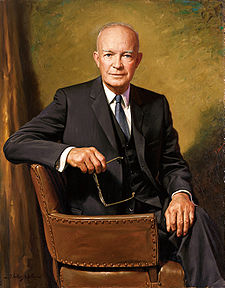
Republican President Dwight D. Eisenhower signs 1957 Civil Rights Act

14, September 25, 1981

President Ronald Reagan appoints the first female Supreme Court Justice, Sandra Day O'Connor.

15. June 12, 1987

President Reagan urges Soviet Premier Mikhail Gorbachev at the Berlin Brandenburge Gate: "Mr. Gorbachev, tear down this wall!"

Are there any key events missing in the stories history of the Republican Party?


Leave a comment below!


Wednesday, June 1, 2016

To Our Armed Forces: Thank You For Your Service

Former UN Ambassador John Bolton did not mince words. A Marylander with directness unrivaled (except perhaps by Donald Trump), the national security spokesman blasted President Barack Obama’s latest international visit to Japan as “The Final Leg of His Apology Tour.”

Under the current Occupant in the White House (who is leaving in six months!), the morale in the United States military has fallen drastically. Obama’s left-wing programs of radically equality, especially in the face of evil, has turned the United States armed forces into a failed social experiment. Disorderly conduct has become the norm, with bureaucrats intent on identity politics rather than protecting the character of this country. Radical ideologies push women into the draft. Women have—and are welcome to—serve in many capacities. Have we forgotten the incredible efforts of military wives and girlfriends during World War II? How about the women who have waited and worked for their men who are standing guard for our liberties, and the world’s security?
Then again, what can one expect from a president who wanted to transform this country? How could he offer an honor when he insisted on not seeing any?

I agree with Mr. Bolton, and Barack Obama should have praised the efforts of the American military, including the difficult yet necessary decision to drop two atomic bombs on Hiroshima then Nagasaki. The argument is simple. If the United States did not engage in a final, terminal action, then Allied forces would have had to invade Japan. President Truman’s decision ensured the preservation of millions of lives, putting to an end a destructive, evil totalitarian ideology eating away at the ends of the earth.

Let us never forget to thank the armed forces—then and now—which fought that we may fight, which died that we may live. Without the brave men and women who defended our country in wars here and abroad, the right to self-preservation and self-determination would have fallen away under the crushed pillars of former republics given way to determined despotism.


The American identity, this great country, was founded on armed forces armed for liberty.
The farmers who stood on the fields of Lexington and Concord in 1775, they first took up arms against the Imperial tyranny of the British Army. Their firm example in the face of more equipped and better organized marksmen (and mercenaries) should remind us that no matter how fearful the struggles we face today (rogue Presidents, arrogant local leaders, bureaucracies run wild with no regard for the rule of law, the bigotry of #BlackLivesMatter and other insipid social injustice warriors) we have no right to cower or cave in.

Even today, as I was driving to an event for a Congressional candidate in the Inland Empire (exercising my right to petition for a redress of grievances), I noticed colorful, wonderful, meaningful banners on street lights from intersection to intersection. The profiles of men and women in uniform decorate our fine cities throughout Southern California.

These signs, these banners inform not just the residents of these communities, but all passers-by, that our neighbors, peaceful inhabitants then and now took up arms to fight for our country. From World War II (and also conflicts before)

We have a home today, we are secure in our daily lives, because of the sacrifices taken for us by American military, who took up arms to defend our rights, regardless of the menace which confronted them.

Torrance, CA also initiated this inspiring memorial program a few years ago. The more streets I drive down, the more home-town heroes I learn about. Louis Zamperini is one of many veterans featured in our city: the World War II hero who broke track records at Torrance High School, survived enemy fire (and torture) to return home, receive a spiritual awakening, and inspire millions more.
Geoff Rizzo, one of my city councilmembers, shared with me then everyone else why he wanted to run for city council. He was not just giving back to his community. He was giving back to his father, who tragically passed away when Geoff was only nineteen years old. Thank you for your service, Frank Anthony Rizzo.

My father fought in Vietnam (I called him this weekend to thank him for his service). His father fought in World War II. Before the attack on Pearl Harbor, American forces were aiding the mainland Chinese against the totalitarian Japanese military. Grandpa Arthur Caldwell Schaper was there helping the Chinese.

Before I hung up, my Dad told me: “Thank you for your service, too, to this country.” My small service would not be possible with the greater service of our armed men and women, those who survived to encourage us today, as well as those who died on the battle field.

For my final words, I will let the better phrase of our greatest President speak to all who have known someone who died in combat for our country:

Executive Mansion,
Washington, Nov. 21, 1864.

Dear Madam,--

I have been shown in the files of the War Department a statement of the Adjutant General of Massachusetts that you are the mother of five sons who have died gloriously on the field of battle.

I feel how weak and fruitless must be any word of mine which should attempt to beguile you from the grief of a loss so overwhelming. But I cannot refrain from tendering you the consolation that may be found in the thanks of the Republic they died to save.

I pray that our Heavenly Father may assuage the anguish of your bereavement, and leave you only the cherished memory of the loved and lost, and the solemn pride that must be yours to have laid so costly a sacrifice upon the altar of freedom.
Yours, very sincerely and respectfully,
A. Lincoln
Have a wonderful and restful Memorial Day. There is still so much good to remember, and let us hope that we can attempt, if not measure up, to the efforts of our nation’s Greatest Generations.