Wednesday, August 13, 2025
Together for Redlands' Creepy Grandpa Defends LGBT Perversion for Kids
Breitbart: The Optimal Tariff Is Much Higher Than We Thought
![]() by |
| August 13, 2025 |
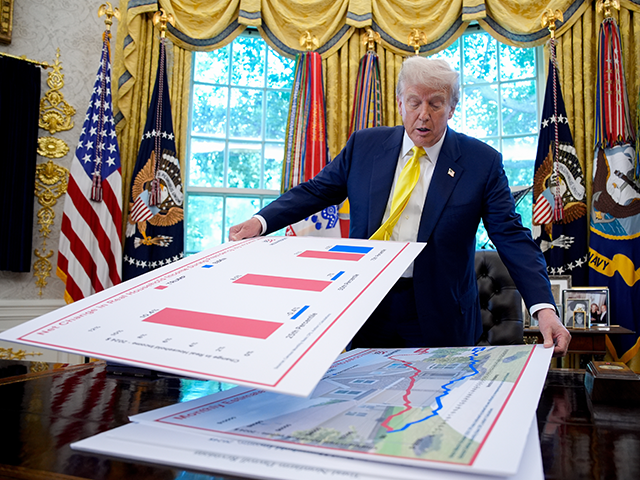
The Optimal Tariff Is Much Higher Than We ThoughtIn a working paper circulated this spring, economists Oleg Itskhoki of UCLA and Dmitry Mukhin of the University of Wisconsin-Madison revisit one of the most controversial questions in international economics: when, if ever, should a country impose tariffs? Their answer, framed in elegant mathematical terms and grounded in the financial realities of today’s global economy, is both surprising and—perhaps unintentionally—vindicating of the Trump administration’s trade agenda. Their central claim is straightforward. Even in a financially sophisticated and deeply globalized world, there is still an optimal tariff for a country like the United States. Once global capital flows, currency movements, and the structure of external assets are taken into account, the textbook logic favoring free trade weakens and in some cases, reverses.
The numbers are eye-catching. In a stylized benchmark with balanced trade, they find a welfare-maximizing U.S. tariff of 34 percent, with a revenue-maximizing rate approaching 80 percent. When calibrated to reflect actual U.S. economic conditions—persistent trade deficits and a large stock of dollar-denominated foreign liabilities—the “optimal” rate falls to around nine percent. Still positive. Still economically justifiable. But importantly, smaller than pure goods-market logic would suggest. That shift comes down to what the authors call “valuation effects”: the fact that imposing a tariff strengthens the dollar, which in turn reduces the dollar value of U.S. foreign assets. In other words, part of the gain in trade terms is offset by a hit to America’s international investment position. No Retaliation, No Problems But the real-world implications of the paper may go further than its authors explicitly argue. While the theoretical framework assumes symmetric retaliation—a so-called Nash equilibrium of mutual tariffs—recent history offers a different pattern. Over the past six years, the United States has imposed sweeping tariffs on dozens of countries, including China, the European Union, and Japan. But instead of a cycle of tit-for-tat escalation, the response has often been negotiation and accommodation. Japan signed a bilateral deal. The EU resumed trade talks. Even China, after a prolonged standoff, agreed to large-scale purchase commitments. India, targeted earlier this month with a new round of tariffs due to its imports of discounted Russian oil, has thus far responded diplomatically. The worst-case scenario envisioned in many economic models—a full-scale tariff war—has yet to materialize. That reality changes the math. As Itskhoki and Mukhin emphasize, the costliest outcomes in their model come from retaliation. But if partners choose instead to accept tariffs and offer concessions—cutting their own barriers, pledging investment, or agreeing to quantity-based trade deals—the welfare gains from U.S. tariffs become significantly larger. The authors do not model these kinds of side payments, but they would act as additional terms-of-trade improvements, directly increasing U.S. income while reducing the necessary tariff rate to achieve trade-balance goals. Put simply, when tariffs serve as a negotiating lever rather than a permanent regime, and when they succeed in eliciting economically valuable concessions, the underlying logic of the paper tilts further toward support. There is also a political and legal nuance the paper nods to obliquely. In theory, production and export subsidies are the most efficient way to raise employment in tradable sectors—especially manufacturing. In practice, however, such subsidies are often difficult to implement, politically controversial, or prohibited by trade agreements. Tariffs, by contrast, are straightforward, enforceable, and legally authorized under U.S. trade law. Managed-trade agreements with investment and purchase pledges effectively mimic the model’s subsidy channel—just delivered through diplomatic means rather than fiscal transfers. Modern Trade Theory Supports Tariffs What makes Itskhoki and Mukhin’s contribution so significant is not just its conclusions, but its modern framing. Rather than viewing tariffs as a throwback to a pre-global era, they present them as a macro-financial instrument, with predictable effects on the trade balance, the exchange rate, and the international investment position. Their work offers a rigorous counterpoint to the dominant narrative that tariffs are inherently disruptive or self-defeating. To be clear, the paper is cautious. The authors acknowledge that their calibration is approximate, that sectoral frictions and long-run dynamics remain outside their scope, and that their results are sensitive to assumptions about asset composition and currency denomination. But the broader message is unmistakable: the debate over tariffs deserves a more nuanced, updated economic treatment. With Donald Trump now back in the White House and tariffs once again at the center of U.S. trade policy, Itskhoki and Mukhin’s paper may stand as the most rigorous academic defense yet of the administration’s approach. The tariffs are already in place. Retaliation, for the most part, never arrived. What followed instead were trade agreements, investment pledges, and targeted purchase commitments—exactly the kinds of negotiated concessions that amplify the model’s predicted gains. Viewed through their framework, Trump’s tariff policy wasn’t a departure from sound economics. It was the real-world application of a theory the profession is only now beginning to formalize. |
Tuesday, August 12, 2025
Aaron Fernando: "Together for Redlands" Bigot Smeared Jewish Resident as "Nazi," Insulted Parents in School District
This is Aaron Fernando:
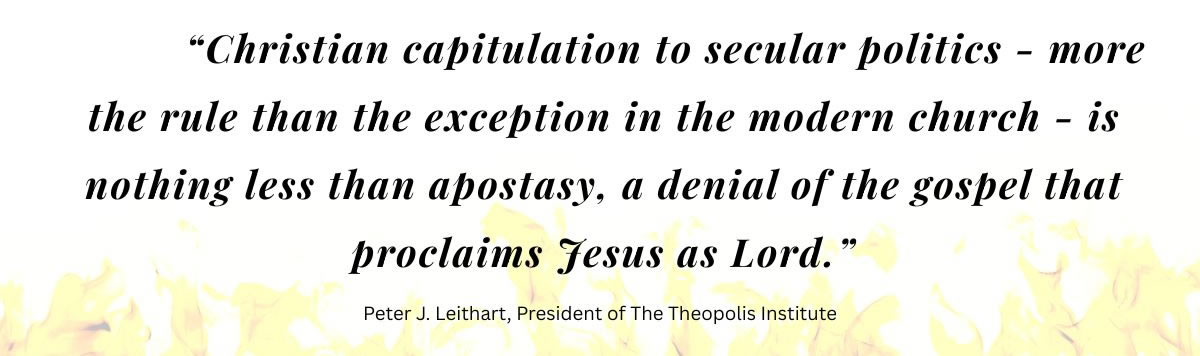
Christian Capitulation to Secularism is Apostacy
|
|
|
|
Sunday, August 10, 2025
Letter to the Editor: More Truth About Hamas in America
Great article today! (August 5, 2025)
I wanted to comment on a few things.
- The Holy Land Foundation trial in Texas (2007-2008) proved that Hamas dba CAIR is operating to great effect throughout the U.S. It identified at least 92 operatives who are part of Hamas’ social infrastructure in Israel and the Palestinian territories. Hamas is an arm of the Muslim Brotherhood, an umbrella organization that includes ISNA, ICNA, MSA, MAS, CAIR, NAIT, AMC, IIIT, etc.
https://www.investigativeproject.org/documents/case_docs/423.pdf
In 2005, Steve Emerson, founder of the IPT, identified Hamas cells in Bridgeview, Detroit, NYC, Washington D.C., Herndon, Springfield, VA, Alexandria, Milwaukee, Chicago, Columbia, MS, Oxford, MS, Dallas, Ruston, LA, Houston, OKC, Tucson, Kansas City, MO, Phoenix, Denver, Los Angeles and Santa Clara.
2. The following countries have moved their Israeli embassies to Jerusalem:
Paraguay
Guatemala
Hondorus
Kosovo
Papua New Guinea.
3. As far as self-determination is concerned, are there similar demands for the Druze and the Kurds? I think we know the answer, especially when Israel is told to STOP trying to save the Druze.
Best,
Janet Levy
Saturday, August 9, 2025
Palestine: One Big Lie
Basic History for the Uninformed:
— Imtiaz Mahmood (@ImtiazMadmood) August 7, 2025
1. Before Israel, there was a British mandate, not a Palestinian state.
2. Before the British Mandate, there was the Ottoman Empire, not a Palestinian state.
3. Before the Ottoman Empire, there was the Islamic state of the Mamluks of Egypt,… pic.twitter.com/tL7bnQ1itz
Friday, August 8, 2025
Responding to NBC "Reporter" Re: Redlands School Board Meeting
Hi Arthur,
I’m a national reporter at NBC News, based in Los Angeles. I am working on a story about a group of parents pushing for Candy Olson to resign from the Redlands school board. I understand that you attended this week’s meeting and spoke at it. During the public comment section, you said you were “proud” of the conservative majority on the board, and that parents protesting Olson were behaving the way Nazis treated their political opponents “before they started pushing people into ovens.”
Could you please clarify whether you are a parent of a child in the district? If not, what drew you to appear at this week’s meeting?
Several people said that after you made your remarks, you began filming children in the audience with your phone, and they weren’t sure why. They also said that you told a child named Quinn, who identifies as non-binary and is autistic, to “shut up” and called them a “fa***t.” Is this true?
Would you like to add any additional comment?
My deadline is this afternoon.
Thank you,
Tyler
--
Tyler Kingkade | National Reporter
Los Angeles, CA
Bluesky | Twitter | Author Page
Signal: tylerkingkadenbc.20
Tyler:
First of all, let's be honest here. This isn't a
"news" report. It's an invented attack piece prompted by a small
group of vicious LGBT activists. The conservative school board majority is
passing policies that the community wants, but a small group of activists doesn't
like. Rather than debate the issue, they have launched a disgusting campaign of
destruction, including attempting to get one school board member fired from her
employment as a nurse. As part of this, they are attempting to elevate a casual
social media "like" into something absurd on its face. Nobody else in
the community cares about it. The fact that NBC News is getting involved is
pretty shameful.
I was invited to speak at the school board meeting by
parents in the district. They are seeking MassResistance's help to stand up to
the bullying and cancel culture efforts from these LGBT activists in the
community and surrounding areas.
For the record, most of the activists attending the
school board meeting on August 5th, 2025 do not live in the city.
Yes, indeed, I did state that the behavior of the LGBT
activists harassing the school board and parents was a lot like the Nazis
before they began sending victims to the gas chambers or concentration camps.
Have you read about the perverse Nuremberg laws promulgated by the Nazis in
1935? They wanted to deprive German citizens, specifically Jews, of their
livelihood and very existence in public spaces. The abuse and invectives that
these LGBT activists have launched at school board members and residents in the
community, even trying to get people fired from their jobs or ruin their
businesses, is fascist behavior just like what the Nazis did before the
outbreak of World War II.
I must remind you that one of those activists called
a Jewish man, Doug Hauser, a Nazi during the line-up outside of the school
board chambers. I have never heard something so abusive and ignorant in my
life.
Whoever told you that I told someone to "Shut up! or
called that person a fa***T is lying to you. I never said such things.
After my comments at the podium, I filmed the audience to
document their abusive and in some cases illegal conduct (it’s against the law
to disrupt a government meeting), including one of the students who flipped me
off. I simply told him, "Do you talk to your father like that?"
I am really disappointed that you are not pointing out
that one of the members of the audience got in my face, violating my personal
space. I had to tell her to back away from me. These abusive tactics should
never be tolerated or permitted in a school board meeting or any public forum.
I doubt that you will report the whole truth of the
matter, but I have the right and responsibility to correct the record.
--Arthur Schaper
Arthur Schaper, Field Director
Website: MassResistance.org
Email: arthur@massresistance.org
Workcell: (781) 474-3005
Main Office: (781) 890-6001