I am a Christian attorney and the founding pastor of First Century Bible Church. I prepared this lesson on biblical law this morning to further our teaching ministry. Save this post for talking points and proof texts in debating the issues of Zionism and Supersessionism.
In Defense of the JewsThis lesson presents a clear, biblical case that the Jewish people (as the collective descendants of Jacob/Israel) maintain an ongoing, covenantal relationship with God grounded in the Abrahamic Covenant. This covenant is eternal, unconditional on God’s side, and irrevocable, even amid unbelief or historical failure. It remains in force until its full prophetic fulfillment in the Millennial Kingdom. The teaching follows a logical scriptural progression: from the covenant’s establishment, its everlasting nature, the division into two houses, historical outworking, New Testament confirmation, the prophesied New Covenant and its fulfillment in Christ as Shiloh, basic contract law principles regarding voluntary acceptance, and future restoration. 1. The Abrahamic Covenant: Eternal and Unconditional on God’s Side.God unilaterally establishes an everlasting covenant with Abraham and his descendants. Genesis 17:7 — “I will establish My covenant between Me and you and your descendants after you in their generations, for an everlasting covenant, to be God to you and to your descendants after you.” This is confirmed as perpetual: Genesis 17:8 — The land of Canaan is given as “an everlasting possession” to Abraham and his seed. God swears by Himself (no human conditions can annul it): Genesis 22:16-18 — “By Myself I have sworn... I will greatly bless you... and in your seed all the nations of the earth shall be blessed.” 2. The Covenant Passes to Jacob/Israel and His DescendantsGod renames Jacob “Israel” after he prevails/wrestles with God (Genesis 32:28), ratifying his heirship. The covenant applies to all 12 tribes collectively called “Israel,” meaning Triumphant with God. 3. Division into Two Houses Due to Jacob’s MarriagesThe covenant’s divisible aspects (e.g., leadership, name “Israel,” birthright) are split between the House of Judah (Leah) and House of Israel (Rachel/Joseph/Ephraim). Yet both remain under the same overarching, eternal Abrahamic promises. This creates parallel lines with rivalry, separation, and prophesied reunification (Ezekiel 37:15-28). 4. Historical Outworking: The Division, Exile, and Persistence of All Twelve Tribes in Two-House TheologyTwo-House Theology illuminates the profound biblical narrative of Israel’s division into two distinct yet related “houses” (or kingdoms), rooted in Jacob’s marriages and the allocation of promises: the House of Judah (primarily tribes of Judah, Benjamin, and Levi, centered in the south with Jerusalem and the Temple) holding the Scepter Promise (royal lineage and Messianic fulfillment), and the House of Israel (the northern ten tribes, often symbolized by Ephraim/Joseph) holding the Birthright Promise (national greatness, multitude of descendants, double portion, and global dispersion/blessing).This division was divinely ordained and prophesied due to Solomon’s idolatry and the resulting judgment: 1 Kings 11:29-39 — The prophet Ahijah tears his garment into twelve pieces, giving ten to Jeroboam, declaring God will tear the kingdom from Solomon’s son Rehoboam and give ten tribes to Jeroboam (House of Israel), leaving one tribe (plus Benjamin) for David’s sake and Jerusalem. After Solomon’s death (c. 930 BC), the united monarchy split into two sovereign kingdoms:
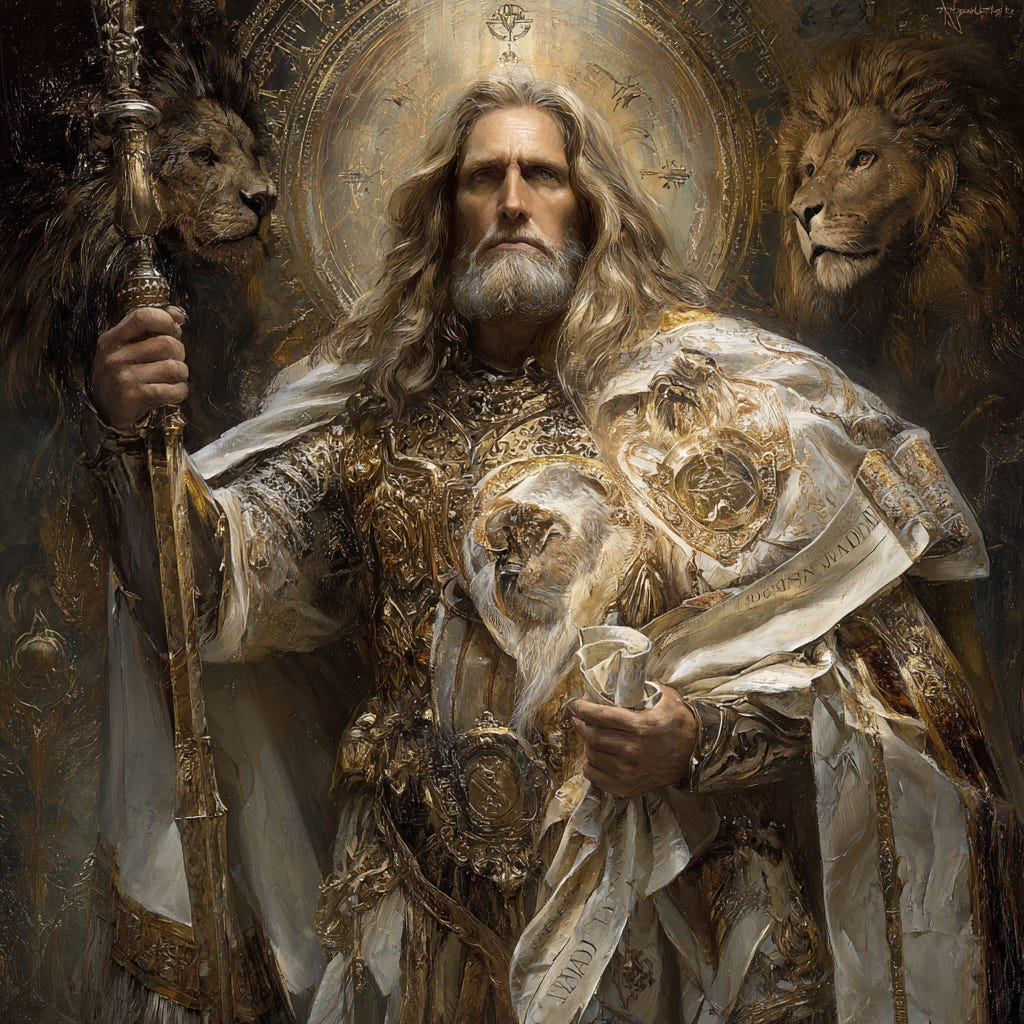
The two houses experienced rivalry and enmity (e.g., wars between them), fulfilling patterns of jealousy between Ephraim and Judah (Isaiah 11:13). The northern house was “divorced” by God for idolatry (Jeremiah 3:8; Hosea 1-3), losing identity as “not My people,” while Judah remained identifiable as the Jewish people. After the Babylonian exile of Judah (586 BC) and partial return (c. 538 BC), representatives of all twelve tribes persisted in the Jewish nation. Remnants from northern tribes had intermingled with Judah over centuries, and post-exilic Judaism encompassed descendants from various tribes (e.g., Anna from Asher in Luke 2:36). In Two-House Theology, this means the House of Judah became the default carrier of the full covenant promises during the northern house’s scattering, preserving the identity of “all Israel” despite the division. Paul affirms this historical reality in his day (c. AD 59–62): Acts 26:7 — “...the promise to which our twelve tribes hope to attain, as they earnestly serve God night and day.” Paul (a Benjamite) speaks of the Jewish people of his era as encompassing all twelve tribes in their shared hope and worship—demonstrating that, even after centuries of separation, elements of the House of Israel were present and integrated within Judah. This supports Two-House Theology’s view that the Jewish people today are the continuing, identifiable heirs of the full covenant (by default), while the scattered House of Israel awaits full prophetic regathering and reunification. 5. New Testament Confirmation: The Gifts and Calling Are IrrevocablePaul directly addresses whether God has rejected His people (the Jews/Israel). He emphatically says no: Romans 11:1 — “Has God cast away His people? Certainly not!” Even in unbelief regarding the gospel: Romans 11:28-29 — “Concerning the gospel they are enemies for your sake, but concerning the election they are beloved for the sake of the fathers. For the gifts and the calling of God are irrevocable.” The “gifts” (promises) and “calling” (election as God’s chosen people) refer to the Abrahamic Covenant blessings. They remain intact because of the patriarchs (Abraham, Isaac, Jacob), not current performance. Paul further stresses future restoration: Romans 11:26 — “And so all Israel will be saved...” 6. The New Covenant in Christ: Renewal for Both Houses and Fulfillment in ShilohGod promises a new covenant specifically with the house of Israel and the house of Judah (both houses), renewing the relationship internally: Jeremiah 31:31-34 — “Behold, the days are coming... I will make a new covenant with the house of Israel and with the house of Judah... I will put My law in their minds, and write it on their hearts... I will forgive their iniquity, and their sin I will remember no more.” Jacob prophesied that the scepter (royal authority) would not depart from Judah until Shiloh comes: Genesis 49:10 — “The scepter shall not depart from Judah... Until Shiloh comes, and to Him shall be the obedience of the peoples.” Shiloh is a Messianic title (meaning “He whose it is,” “the Peaceful One,” or “Restgiver”) pointing to the Messiah from Judah’s line who brings ultimate rest, peace, and obedience from the nations. This is fulfilled in Jesus Christ, the Lion of Judah (Revelation 5:5), who brings spiritual rest (Matthew 11:28-29) and restores the House of Israel (the prodigal line) on new covenantal terms rooted in faith—not works or law-keeping, but belief in Him as the singular seed who blesses all nations (Galatians 3:16). Through Christ’s death and resurrection, the New Covenant is inaugurated (Luke 22:20; Hebrews 8:6-13), offering forgiveness, heart transformation, and indwelling Spirit—restoring the prodigal House of Israel (and grafting in Gentiles) by faith alone. 7. Basic Contract Law: Why Jews Cannot Be Forced to Accept the New Terms InvoluntarilyA covenant functions like a binding contract: God unilaterally initiated the Abrahamic Covenant (binding Himself alone), but acceptance of its terms (especially renewal or upgrade) is voluntary. The original covenant is irrevocable on God’s side (Romans 11:29)—He cannot withdraw His promises or relationship with Israel. The New Covenant is a renewal/upgrade offered to the same parties (house of Israel and Judah), but it requires personal acceptance by faith in the Mediator (Christ). In basic contract law, no one can be forced into a new contract involuntarily—consent is essential. Coercion invalidates agreement. Therefore, while the Abrahamic promises endure (Jews remain “beloved for the sake of the fathers” – Romans 11:28), full participation in the New Covenant’s blessings (heart-written law, complete forgiveness, Spirit-indwelling) comes only through voluntary faith in Christ. God honors free will: The old terms persist for those who do not accept the new (strained but intact relationship), while faith opens the renewed covenant. This rejects forced supersessionism (replacement theology)—God never revokes His gifts. 8. Prophetic Assurance: Israel Cannot Cease as a Nation Before GodGod ties Israel’s national existence to the fixed order of creation: Jeremiah 31:35-37 — “Only if these decrees [of sun, moon, stars, sea] vanish from My sight... will Israel ever cease being a nation before Me... Only if the heavens above can be measured and the foundations of the earth below be searched out will I reject all the descendants of Israel because of all they have done.” Since measuring the heavens or searching earth’s foundations is impossible for humans, God’s rejection of Israel as His people is likewise impossible. The covenant endures despite sin. Key TakeawaysThe Abrahamic Covenant is everlasting (Gen. 17:7), irrevocable (Rom. 11:29), and unconditional on God’s faithfulness. The Jewish people today are “all Israel” by default (as the continuing heirs of Jacob’s 12 tribes), beloved for the patriarchs’ sake. Their relationship with God is strained due to unbelief in Messiah (Rom. 11:28), but not severed — it persists through the original covenant. The New Covenant (Jeremiah 31) is God’s promised renewal, fulfilled in Shiloh (Jesus), restoring the House of Israel on faith-based terms. Contract law shows acceptance is voluntary—no forced conversion; God’s faithfulness persists regardless. This sets the stage for full restoration: Jewish acceptance of Jesus as Messiah at His Second Advent (Zechariah 12:10; Romans 11:26), reunification of the houses, and the Millennial Kingdom. This biblical framework honors God’s unchanging character and unbreakable word. It calls believers to pray for Israel’s salvation while affirming their special, ongoing place in God’s plan. As Paul concludes in Romans 11:33: “Oh, the depth of the riches both of the wisdom and knowledge of God!” ### |






No comments:
Post a Comment