Friday, January 23, 2026


Thursday, January 22, 2026
"Gay People" Turn on Their Own Movement
The honest ones will admit it. pic.twitter.com/Ly3nJCFwIK
— AuthentiKate ☂️🪔🍒 (@kateiswell) May 30, 2025
ACLU Meltdown over One Year of Trump 2.0
Arthur – Just over a year ago, President Donald Trump was sworn in for a second term. His assault on our fundamental rights and attempts to expand presidential power began immediately, resulting in a record 225 executive orders and counting – more orders than he signed in all four years of his first term. One year in, our work is guided by a simple principle: We are only in a constitutional crisis if we allow ourselves to be. With that in mind, we are urgently asking for your committed support and solidarity as we begin the second year of Trump's presidency. Please, will you be one of the 500 new members we need to fuel our critical work in the months ahead by making your first gift now? YES, I'M READY TO DEFEND CIVIL LIBERTIES!
Although we faced an incredibly bleak landscape for civil rights and liberties in 2025, the ACLU did not relent. Thanks to supporters like you, Arthur, we were ready on day one and able to meet the Trump administration with resolve – defeating, delaying, and diluting their most dangerous attacks at every turn.
As we continue to fight back – and win – against the Trump administration's massive constitutional violations and dangerous attacks on our democracy, we are relying on grassroots support from our members in all 50 states and beyond. Thank you, The ACLU Team |
Wednesday, January 21, 2026
"Project Homekey" Supervisor Janice Hahn Endorses Sellout Sharon for Torrance Mayor
Sharon Kalani has betrayed a number of voters across the city of Torrance.
She wanted to focus on local issues, and she campaigned on listening to the will and interest of the voters.
Sellout Sharon began showing her true colors when she pushed the PRIDE Resolution in 2024, despite the fact that the vast majority residents showed up to city council to reject the proposal.
She went along with raising the sales tax, Measure SST, when she could have shown real leadership and found ways to streamline services and cut costs.
Then she tried to shut down the Armed Forces Day parade. Sure, she says that she wanted to move it t Skypark to save money, but such a measure would have forced the parade to wind down and disappear.
She is arrogant and out-of-touch, not taking into consideration what is best for the city.
And now she's embracing more big-spending and out-of-touch principles, welcoming the endorsement of LA County Supervisor Hahn.
This is the same supervisor who tried to force the Homekey Project, a homelessness construction that would have stood in one of the busiest sections of Torrance, close to schools, homes, apartments, and other businesses: unsafe, unsanitary, and unsound!
The proposal was so unpopular that frequent protests popped up on the corner of Madrona and Torrance Blvd. to call attention to this project and stop its advancement.
Janice Hahn does not care about the city of Torrance, and neither does Sharon Kalani.
She is unfit to serve as our next Mayor.

Dr. Scott Lively: The Abrahamic Covenant
 |
BY GOD'S OWN HAND: Recognizing the Jews’ Outsized Global Influence as Prophetic Fulfilment
A Deep Dive on the Abrahamic Promise of “Possessing the Gates of Their Enemies"
|

| |||||||||||||||


 |
Introduction: The Abrahamic Covenant as a Unilateral Legal Document
In my teaching, particularly as developed in The Prodigal Son Prophecy, the Abrahamic Covenant is best understood as a unilateral legal contract that God Himself initiated, drafted, and bound Himself to perform—without any conditions that could be broken by human failure. This is most vividly demonstrated in Genesis 15, the “covenant of the pieces,” where God alone passes between the divided animals while Abraham sleeps in a deep, divinely induced slumber (Genesis 15:12, 17). In ancient Near Eastern covenant-making, the party passing through the pieces was saying, “May I become like these animals if I fail to keep this covenant.” By passing through alone, God staked His own divine existence and reputation on fulfillment—making the covenant irrevocable and unconditional from His side.
The covenant’s seven key terms (as I outline them) are:
Everlasting nature
Unconditional obligation on God
Land as everlasting possession
Numerous descendants / seed
Personal blessing to Abraham
Blessing to all nations through the seed (singular, the Messiah – Galatians 3:16)
Division into two houses (Judah and Israel) with parallel inheritances
These terms constitute God’s binding oath, confirmed by His self-sworn declaration in Genesis 22:16 (”By Myself I have sworn”). Paul reaffirms this irrevocability in Romans 11:29: “For the gifts and the calling of God are irrevocable.” The covenant is thus a legal instrument that God cannot—and will not—revoke, regardless of the conduct of Abraham’s descendants. It guarantees survival, identity, and certain privileges to the physical seed of Abraham, Isaac, and Jacob (all twelve tribes collectively called “Israel”) throughout history.
The Promise of “Possessing the Gate of Their Enemies” – A Covenant Term of Observable Dominion
One of the most powerful, enduring, and practically observable terms of the Abrahamic Covenant is the specific promise given in Genesis 22:17—immediately following Abraham’s supreme act of obedience in offering Isaac—and then reinforced with a double witness in Rebekah’s blessing as she departs for marriage to Isaac (Genesis 24:60):
“...your descendants shall possess the gate of their enemies.”
This single phrase carries enormous weight because it is not merely poetic or spiritual language—it is a concrete, covenantal grant of strategic influence and dominion. Unlike promises that depend on Israel’s corporate faithfulness (such as blessings tied to obedience under the Mosaic Covenant), this term flows directly from God’s unconditional oath sworn by His own name. It therefore operates as an irrevocable endowment, embedded in the legal structure of the Abrahamic Covenant itself.
What makes this promise especially striking is how it explains what would otherwise be an inexplicable historical and contemporary phenomenon: the outsized global influence of the Jewish people relative to their extremely small numbers (approximately 15.8 million worldwide in 2025, roughly 0.2% of the global population) and their often tenuous, interrupted physical hold on the Promised Land across millennia.
From ancient exiles in Egypt and Babylon, through medieval European expulsions, to the Holocaust and repeated modern wars, the Jewish people have faced existential threats that should have led to assimilation or annihilation. Yet they have repeatedly emerged—not merely surviving, but disproportionately shaping finance, science, medicine, academia, law, media, technology, and culture in every era and in nearly every host nation.
This pattern defies purely sociological, economic, or genetic explanations. It aligns precisely with the covenant’s legal guarantee that Abraham’s descendants would “possess the gate of their enemies”—gaining control, leverage, and decisive influence over the centers of power belonging to those who oppose them or seek their destruction.
The article that follows explores this covenantal term in depth: its precise biblical and linguistic meaning, its clear manifestations in the lives of key figures from both houses of Israel, its operation across history and into the modern world, and its profound implications for understanding God’s unchanging faithfulness to His sworn word.
By examining this promise, we gain insight not only into Jewish history but into the sovereign outworking of God’s unbreakable legal commitment to Abraham and his seed.
Linguistic and Practical Meaning of “Enemies”
Linguistically, the Hebrew word translated “enemies” is אֹיֵב (’oyev), from the root איב (’ayab), meaning “to be hostile toward, to hate, to oppose.” In biblical usage, it refers to:
Those who actively oppose or seek to harm God’s covenant people (e.g., Pharaoh, Amalek, Canaanite nations).
Broader adversaries—spiritual, national, or ideological—who stand against the purposes of God through Israel.
Practically, it includes any force, nation, system, or individual that would seek to destroy, subjugate, or marginalize the seed of Abraham.
Importantly, “enemies” does not imply that Abraham’s descendants are always righteous or that their adversaries are always wholly evil. The term is relational and covenantal: whoever stands in opposition to the fulfillment of God’s promises to Abraham becomes, by definition, an “enemy” in this context. The promise is that God will sovereignly position Abraham’s seed to gain influence and control over the power centers of such opponents—often turning potential destruction into preservation and blessing.
The Abrahamic Covenant, as detailed in Genesis 22:17 (the codicil sworn by God after Abraham’s obedience in the binding of Isaac), includes a profound and enduring promise:
“...your descendants shall possess the gate of their enemies.”
This term is one of the key legally binding elements of the covenant (term #5 in the expanded list: “possession of the gate of their enemies,” with double witness in Genesis 24:60 via Rebekah’s blessing). In biblical terms, “gates” refer not merely to literal city entrances but to the centers of governmental, judicial, economic, and social power in ancient Near Eastern culture.
Biblical Meaning of “Gates”
In Scripture, city gates were far more than defensive structures—they were the hubs where:
Justice was administered (e.g., elders/judges sat at the gates for legal proceedings – Deuteronomy 16:18; Ruth 4:1-11).
Commerce and trade occurred (markets, negotiations – Proverbs 31:31).
Governance and authority were exercised (kings/thrones at gates – 1 Kings 22:10; public announcements – Jeremiah 17:19-20).
Influence over the city was decided—whoever controlled the gates controlled the city’s destiny, economy, and defense.
Thus, “possessing the gate of their enemies” means Abraham’s descendants would gain strategic control, influence, and dominion over the power centers of opposing nations or forces—often through wisdom, favor, and divine sovereignty rather than solely military conquest. This promise is unconditional on human righteousness (God binds Himself), yet God remains sovereign, directing outcomes for His purposes, including the ultimate protection of His people (Romans 8:28: “all things work together for good to those who love God”).
This covenantal power explains the remarkable phenomenon of Jewish outsized influence relative to their tiny global population (approximately 15.8 million in 2025, or ~0.2% of the world’s 8 billion people). Despite historical exiles, persecutions, and a tenuous hold on the Holy Land for centuries, Jewish individuals and communities have disproportionately shaped finance, science, medicine, law, media, academia, and technology—fields representing modern “gates” of power.
Manifestations in Biblical Figures: Joseph (House of Israel) and Daniel (House of Judah)
The promise operates through both houses, often in exile or diaspora settings, demonstrating God’s faithfulness irrespective of the recipients’ perfect righteousness.
Joseph (House of Israel/Birthright Line): Sold into Egyptian slavery, Joseph rose to become second-in-command under Pharaoh (Genesis 41:38-44). He controlled Egypt’s economic gates—grain storage, distribution during famine, and national policy—preserving not only Egypt but surrounding nations (including his own family). His influence stemmed from divine wisdom (interpreting dreams), integrity, and favor, not personal merit alone. Joseph wielded power over Egypt’s “gates” (economy, governance), saving lives and fulfilling the birthright promise of multitudes and dominion.
Daniel (House of Judah/Scepter Line): Exiled to Babylon, Daniel and his friends gained favor through faithfulness to God (Daniel 1). Daniel interpreted dreams/visions for kings (Nebuchadnezzar, Belshazzar, Darius), becoming a high official in successive empires (Babylonian, Medo-Persian). He influenced governmental and advisory gates—counseling rulers, preserving Jewish identity, and even affecting imperial policy (e.g., promotion of monotheism in decrees – Daniel 6:25-27). Like Joseph, Daniel’s power was God-granted, not conditional on flawless conduct, yet he remained true amid pagan surroundings.
These patterns repeat in history: Jewish individuals rise to influence in host nations (e.g., finance in medieval Europe, science in the 20th century), often despite hostility, fulfilling the covenant’s promise of gate possession.
The Power Is Not Conditional—Yet God Is Sovereign
This influence is not earned by righteousness—many wielding it may not be observant or even believers—but flows from the irrevocable covenant (Romans 11:29). God remains sovereign, overriding abuses (e.g., ensuring no ultimate harm to His redemptive plan). Romans 8:28 assures that even misuse of power works for good toward the Bride of Christ (the restored House of Israel under the New Covenant).
Critics decry “elite controls” and abuses, yet the net effect on civilizational progress has been largely benign and beneficial over the long term. Consider: The average modern American lives decades longer than a medieval counterpart, carries a smartphone granting instantaneous access to humanity’s accumulated knowledge, benefits from medical advances (many pioneered by Jewish scientists), and enjoys technologies transforming daily life. These advancements—often disproportionately influenced by Jewish innovators—represent gate possession yielding widespread blessing, aligning with the covenant’s global intent (”in your seed all nations shall be blessed” – Genesis 22:18).
The Christian Hebraic Movement as a Driver of Judeo-Christian Civilizational Progress
In my teaching, the Christian Hebraic Movement is not a recent or marginal phenomenon but a centuries-long historical force within Christianity that has profoundly shaped Judeo-Christian civilization. This movement—often called Christian Hebraism—began in the Renaissance with key figures like Johann Reuchlin (1455–1522), the German humanist and scholar who pioneered the serious study of Hebrew among Christians. Reuchlin, on par with Erasmus in eminence, defended Jewish texts against destruction and laid the groundwork for Christians to engage directly with the Hebrew Bible and rabbinic sources, shifting theology away from purely Latin traditions toward a more authentic biblical foundation.
The movement dramatically expanded in the mid-1600s, particularly in Holland and England, where Protestant scholars and leaders embraced Hebraic principles as central to republican governance, religious liberty, and millennial hope. In the Netherlands, the tolerant “Jerusalem of the North,” figures like Hugo Grotius (1583–1645)—the father of international law—engaged deeply with Jewish thought, corresponding with Jewish scholars and drawing on biblical models for legal and political theory. Grotius’s work influenced concepts of natural law and just governance rooted in Scripture.
A pivotal Jewish ally in this era was Manasseh ben Israel (1604–1657), the renowned Rabbi of Amsterdam, often called the most influential Jew of the Renaissance. Manasseh was a polymath—printer, philosopher, and advocate—who corresponded with Grotius, Queen Christina of Sweden, and others. His millennial writings, including Esperança de Israel (Hope of Israel, 1650), argued for the readmission of Jews to England to fulfill prophecies of global ingathering and the Messianic age. Dedicated to the English Parliament, this work aligned with Puritan and millenarian expectations in England, where many saw the Hebrew republic as a model for godly governance.
This Hebraic surge fueled the rise of the Dutch Republic—a tolerant, commercially innovative state that became a beacon of freedom—and the English Republic under Cromwell. The readmission of Jews to England (officially in 1656–1657, following Manasseh’s lobbying) symbolized the practical outworking of these ideas: a society open to Jewish contributions, blending biblical law with emerging republican principles.
The movement culminated in two historic “foundings”:
The founding of the American Republic, where Puritan settlers and Founding Fathers drew heavily on Hebraic models. Concepts like covenantal government, religious liberty, and the “melting pot” ideal—where diverse peoples unite under shared biblical values—echo the biblical vision of nations blessed through Abraham’s seed. America’s exceptional emphasis on individual rights, limited government, and moral law reflects this Hebraic influence, transforming a wilderness into a beacon of liberty and innovation.
The re-founding of Israel in 1948, which fulfilled ancient prophecies of restoration and ingathering, closing a prophetic loop begun centuries earlier in the Hebraic Movement’s millennial hopes.
Throughout this long arc—from Reuchlin’s defense of Hebrew learning, through the Dutch-English republican revolutions allied with figures like Manasseh ben Israel and Grotius, to the American experiment and modern Israel’s rebirth—the Christian Hebraic Movement has driven Judeo-Christian civilizational progress. By recovering the Hebraic roots of Scripture—covenant theology, prophetic restoration, and Judeo-Christian ethics—it fostered collaboration between Christians and Jews, advanced legal, scientific, and ethical breakthroughs, and countered antisemitism with mutual respect.
This synergy has accelerated Western innovation, human rights, and global blessing—fulfilling the Abrahamic Covenant’s promise that “in your seed all nations shall be blessed” (Genesis 22:18).
In recent decades, this ancient movement finds renewed expression in modern Hebraic Roots efforts, but its true historical impact spans centuries, proving that alignment with biblical Hebraic foundations—while affirming Christ as fulfillment—has been a primary engine of Judeo-Christian civilizational advancement.
Anticipating Challenges to This Thesis and Conclusions
This interpretation of the covenant’s “gate possession” promise as explaining Jewish outsized influence invites several predictable objections. Below are the most likely challenges and direct biblical/theological responses.
“This sounds like a conspiracy theory or justification for antisemitic tropes about Jewish power and control.”
The thesis is not conspiratorial—it is explicitly biblical and covenantal, rooted in Genesis 22:17 and 24:60, not modern political theories. The promise is God’s sovereign declaration, not a human plot. Historically, Jewish influence has often arisen despite hostility, not through secret cabals (e.g., Joseph and Daniel were elevated by pagan rulers). The covenant operates openly under divine sovereignty, and any abuse is overridden by God (Romans 8:28). Recognizing disproportionate influence is factual observation (e.g., Nobel Prize statistics, leadership in key industries), not accusation. The article affirms that net civilizational benefits have been positive and that ultimate accountability rests with God.“If the power is unconditional on righteousness, why do so many Jewish people suffer persecution and why isn’t the influence always benevolent?”
The covenant promises are irrevocable on God’s side (Romans 11:29), but human free will and sin remain. God does not micromanage every action of covenant heirs—He allows consequences for unrighteousness (e.g., northern kingdom’s exile, Judah’s Babylonian captivity). Persecution often stems from jealousy over covenantal favor (Isaiah 11:13; Genesis 37 Joseph’s brothers). Yet God uses even suffering for redemptive purposes (Romans 8:28), and the promise ensures survival and influence despite adversity. Benevolence is not guaranteed in every instance—only that the long-term trajectory blesses the nations through Abraham’s seed, culminating in Messiah.“Isn’t this just cherry-picking verses to support a pro-Jewish or Zionist agenda?”
The interpretation follows the plain reading of the text: God swears an unconditional oath (Genesis 22:16), the promise is repeated (Genesis 24:60), and Paul declares the gifts irrevocable (Romans 11:29). Two-House Theology integrates both houses (Judah and Israel) without replacement theology. The focus on “gate possession” is not modern Zionism but ancient covenant language applied to historical and contemporary patterns. The article emphasizes spiritual restoration through Christ (Shiloh) for both houses, not political nationalism alone.“If this influence is covenantal, why do some Jewish elites oppose Christianity or biblical values?”
The covenant is ethnic/national in its Abrahamic form—applying to physical descendants regardless of personal faith (Romans 11:28: “concerning the election they are beloved for the fathers’ sake”). The New Covenant is faith-based and open to all (Jeremiah 31:31-34; Hebrews 8). Thus, covenantal gate possession can operate through non-believing individuals while God preserves a faithful remnant and works all things for the good of the Bride of Christ. This mirrors biblical examples: Joseph served a pagan king, Daniel counseled idol-worshipping rulers—yet both advanced God’s purposes.“The idea that Jewish influence has been ‘mostly benign’ ignores real harms (e.g., financial crises, media bias, etc.).”
The article acknowledges abuses and that power can be misused. However, evaluating the net effect over centuries requires a long view: exponential increases in lifespan, literacy, scientific knowledge, and quality of life coincide with periods of heightened Jewish contribution in diaspora settings. Romans 8:28 does not mean every action is good—only that God sovereignly redeems even evil for ultimate good toward His people. The covenant’s global blessing promise (Genesis 22:18) is being fulfilled progressively, pointing to full consummation at Christ’s return.
Conclusion: The Enduring Covenant in Action
The promise to “possess the gate of their enemies” is not obsolete—it’s actively demonstrated in Jewish outsized influence, biblical precedents like Joseph and Daniel, and modern civilizational blessings. Despite a tiny population and historical challenges, the Abrahamic Covenant’s irrevocable nature ensures this power endures, sovereignly directed by God for ultimate good. As believers, we pray for Israel’s full restoration (Romans 11:26) while recognizing this phenomenon as evidence of God’s unchanging faithfulness. The covenant stands eternal—blessing the world through Abraham’s seed, culminating in the Messiah who brings true peace and dominion.
Tuesday, January 20, 2026
MassResistance Report: GSAs Connect Students to Dangerous Groups
MassResistance Special 10-part Report:
Why LGBT “GSA Clubs” must be banned from all public schools.
Part 5: Connecting students to dangerous groups and individuals
School GSA clubs bring vulnerable schoolchildren into contact with degenerate LGBT adults. Negative impacts can last a lifetime.
January 20, 2026
 Across the country, adult LGBT groups collaborate with school GSA clubs to lure students to their unsupervised events, with activist adults. Note the "youth" age range on the poster: 13-24.
[All photos by MassResistance except where noted.]
Some of the most passionate phone calls we’ve gotten over the years have been from parents whose children have been molested – physically or psychologically – by homosexual adults to whom the children were led by their school without the parents’ knowledge. Several of those parents became MassResistance activists to help protect others.
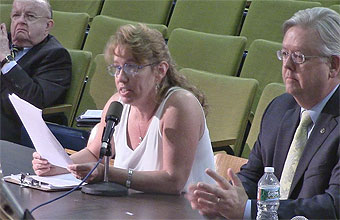
This MassResistance mother from Cape Cod testified in 2016 before the Massachusetts Legislature, detailing how her son’s high school steered him to an outside LGBT group without her knowledge. Homosexual adults there persuaded him that he was really “gay.” He continues to lead a homosexual lifestyle. She will be telling her full story in our next MassResistance article.
As we’ve outlined earlier, school GSA clubs recruit and attract students who are confused, “questioning,” have underlying emotional or mental health challenges, are on the autism spectrum, or otherwise “don’t fit in.” These vulnerable students are then encouraged to join the LGBT “community.”
School GSA clubs (“Gay Straight Alliance” or “Genders and Sexualities Alliance”) are a prime way that students are led to outside LGBT individuals and groups. GSA clubs are strategically organized to connect with adult LGBT activists and resources.
Here are five categories of LGBT groups and individuals that GSA clubs connect students to:
1. Local LGBT groups run by adults that target youth.
Across the country are hundreds of local adult-run “LGBTQ support groups” that work to attract children in the community – largely from the GSA clubs in the local public schools. Some of these groups primarily focus on “youth.” Other groups are ostensibly for adults but have well-organized programs to bring in children. These groups advertise their services as free and “confidential” (i.e., without parents’ knowledge) where the kids can “be who they really are.” They include kids as young as 12.
 This is what we're seeing across the country: An adult-led LGBT "pride youth group" for kids in grades 7-12 that's "confidential" and is a "safe and welcoming space to express yourself." The results are a parent's nightmare.
They are not just in big cities, but also in small towns throughout America – even in “red” states. In many locales, the school officials openly cooperate with these groups. In some places the local school system even helps fund them!
When kids get involved with these adult homosexual and transgender activists, it’s dangerous because there is no accountability. Thus, parents in several states have appealed to MassResistance for ways to get these “support group” centers closed down.
In a few states this has been going on for decades. For example, in Massachusetts BAGLY (Boston Alliance of LGBTQ+ Youth) has been active since the 1990s. It is run by a man who dresses as a woman and fully supports transgender behaviors among kids. Its meetings and events are open to “youth ages 22 and under,” and its drop-in space includes people “25 and under.” It helps high school students start GSAs and provides speakers for club or school events.

The founder and leader of BAGLY is a man who dresses as a woman.
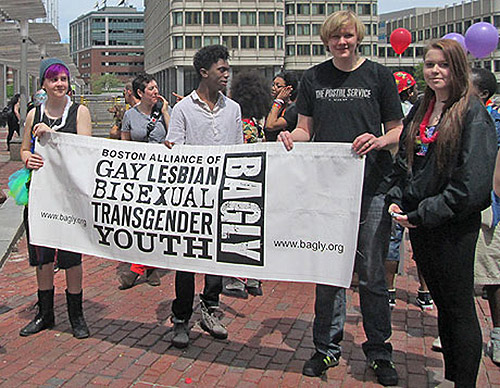 Students holding the BAGLY banner at a Youth Pride event.
BAGLY is one of 15 such regional groups in Massachusetts. This 2014 MassResistance report shows how these groups were targeting children even back then!
Similarly, New Hampshire has a new statewide network working with GSAs run by adult activists.
Here are some examples of how BAGLY connects youth and dangerous adults: BAGLY has co-sponsored degenerate dance events, has heavily promoted transgenderism at their youth events, and collaborated with an organization that promote transgender prostitution.
Occasionally, the terrible stories of what happens to kids in these groups get exposed. In 2007, the Christian Civic League of Maine uncovered information (which MassResistance reported) that adults running a local LGBT “youth” group in Maine were having homosexual sex with boys as young as 14. Drugs, alcohol, and suicide threats were involved.
To make matters worse, in some states such as Massachusetts, the government itself supports the connecting of outside groups to schoolchildren. For example, BAGLY has an entrée into schools across the state as a member of the Massachusetts LGBTQ Youth Commission, which has influence in the state government. In 2024, this depraved commission called for legalizing teenage prostitution and lowering the age of sexual consent.
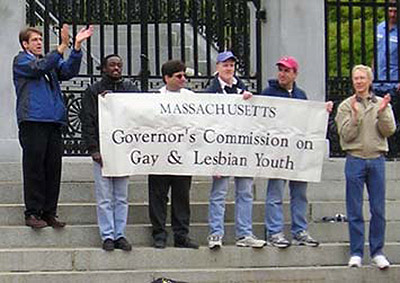 Originally it was named the "Governor's Commission on Gay and Lesbian Youth." Here some of the homosexual "commissioners" applaud at a youth pride march. (The one at far right was later arrested for soliciting sex from college boys.)
2. LGBT teachers and other adult activists in the schools
Hardcore LGBT activists who work in the schools often become the advisors of the GSA clubs.
Note the recent arrest of Scott McGinley, a middle school librarian and GSA coordinator in Longmeadow, Massachusetts.
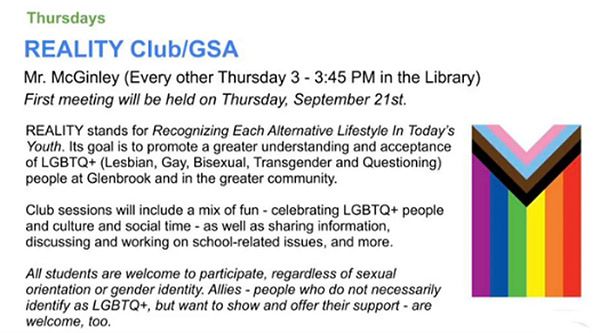 A poster advertising McGinley and his GSA club for middle school students.
McGinley was arrested for child porn distribution. This is confirmed in an FBI report.
According to reports, a few years earlier middle school students had found McGinley’s account on the notorious LGBT dating app Grindr. A parent said a student who was circulating the information was punished – but McGinley was not.

McGinley's photo (which he took himself) from the LGBT dating app Grindr. A student attempted to warn the school authorities about this.
This case illustrates the result of nondiscrimination laws and policies allowing LGBT adults to join school staff.
As we noted previously, Kevin Jennings started his GLSEN activism while a history teacher at Concord Academy in Massachusetts, creating one of the first GSAs there. He bragged about taking his GSA members to the 1993 national march on Washington, DC for “gay and lesbian rights.” Other Massachusetts GSAs at that march were from Phillips Academy and Brookline High School. (Recall that the 1993 Gay Rights platform pushed the notion of “youth” rights, including loosening the sexual age-of-consent laws.)
3. LGBT youth “conferences” and “summits”
Earlier in this series we described the annual GLSEN conferences (beginning in 2000 with ‘Fistgate”) and showed examples of some of their LGBT-oriented workshops.
The LGBT movement’s obsession with including schoolchildren at their adult events has lessened with public exposure by groups including MassResistance. But GSAs routinely use materials provided online by the activist organizations.
National and local LGBT groups now put on conferences, summits, and workshops tailored for schoolchildren which include a range of bizarre and depraved sexual topics. These events recruit kids through GSA clubs in schools. (Pro-LGBT teachers and adult “allies” may also be included.)
Here are some examples of recruitment posters:
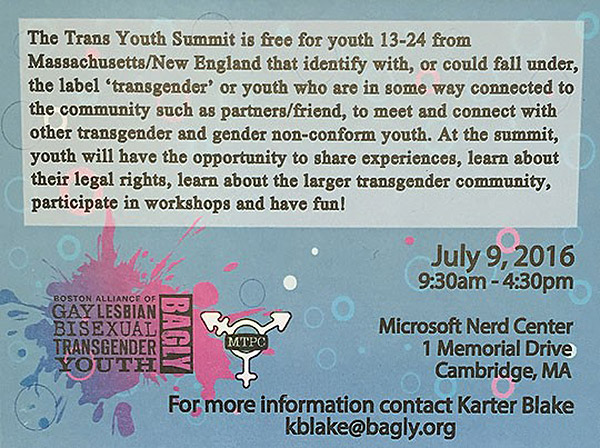 This "Trans Youth Summit" poster from 2016 probably revealed too much, and since then the LGBT acivists have kept the advertising more generic, as you can see below.
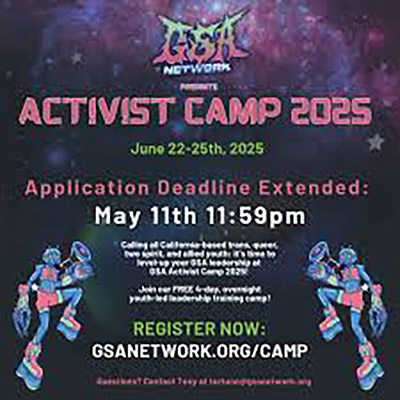

4. Adult Gay Pride Parades
As noted above, Kevin Jennings took his high school students from the GSA he had started at Concord Academy to the 1993 gay rights march on Washington. It was the first major national event to push “bisexuality” and “transgender rights” alongside “gay and lesbian rights.” The vulgarity was rife then as now.
School GSA clubs are now recruited to march in the adult “gay pride” parades in their cities and towns. This brings them in contact with a wide range of depraved and dangerous people. It also has the psychological effect of making the youths feel comfortable around those dysfunctional people.
 Just two of MANY: High school GSA clubs (above and below) marching in the adult Boston Gay Pride parades.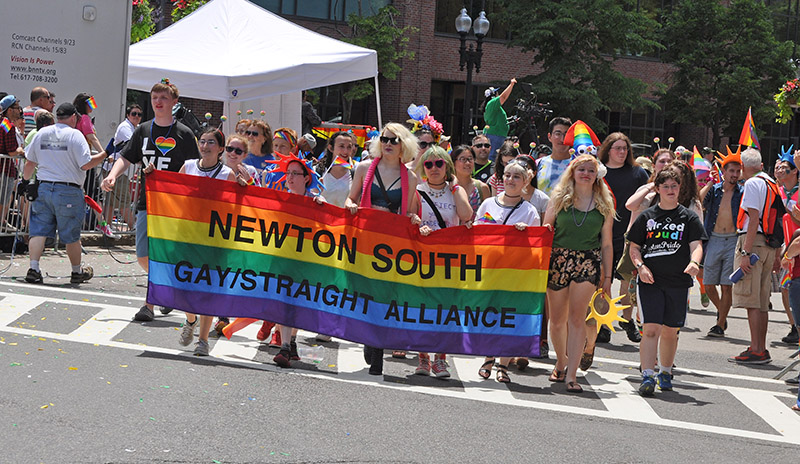
 BAGLY's contingent in this Boston adult gay pride parade has the aggressive slogan: "Queer. Youth. Movement."
5. Government sanctioned “youth pride” events
A recent trend across the country has been for the local LGBT support groups to state “pride” events in public parks, that are designed to attract young people. Most of these are sanctioned and applauded by the local governments, though not necessarily funded by them. They are often scheduled just when school is ending, so the local GSA clubs often participate.
In recent years MassResistance activists in several states have aggressively protested – and often successfully derailed – these horrendous events.
 Over a hundred local Idaho MassResistance people boldly confronted the LGBT invasion of their town.
In some big cities such as Boston, the state or local governments sponsor and aggressively promote specific “youth pride” events.
The first Massachusetts Youth Pride event in 1995 was openly advertised as a joint adult/youth event: “Gay and Straight Adults Marching in Support of Youth” read the poster. The activists later apparently realized that label was not good for public relations. So in the following years they portrayed it as simply a “youth” event.
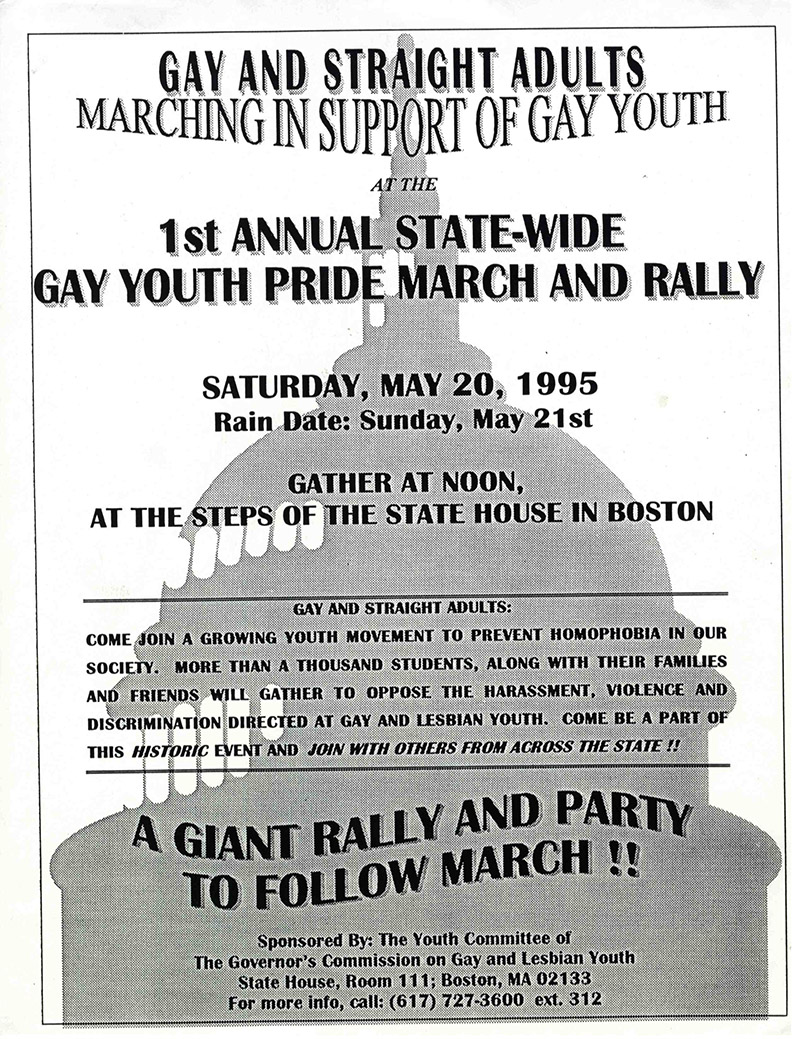
In Boston, these celebrations are held in the spring when school is still in session. The attendees are predominately GSA club members from schools across the state, invited by the event’s adult LGBT organizers.
When well-funded LGBT activists have the green light to put together annual “youth pride” events for kids using public facilities – without parents present – the results can be ghastly.
MassResistance has reported on and exposed many of the Boston “Youth Pride” events over the years. We’ve already covered the horribly obscene materials that kids have received at these events. But the interactions kids have with dangerous and perverted people are also extremely disturbing.
GSA groups from across the state come to the event in Boston each May to rally, parade with their banners, hear speakers, watch drag entertainers, pick up condoms and lube, get how-to sex pamphlets, and join the BAGLY prom at the end of the day (usually in Boston City Hall). From all this, it’s hard to deny that the GSAs are, at their core, about sex.
At these events, adult activists mingled with students and distributed materials about risky LGBTQ+ sex practices or gender transitioning. Even prostitution was a topic.
Here is a sample of what schoolchildren from across the state have encountered at those Boston events:
 Bizarre transgender adults have been a staple at every Youth Pride event that we've seen.
 Radical rhetoric and ideas. Leslie Feinberg (right), “Transgender Warrior” author and editor of the communist newspaper “Workers World,” was the keynote speaker at a Youth Pride event. At that same event Michelle Tea, founder of the Drag Queen Story Hour organization, was also a speaker. [Photo: PFLAG]
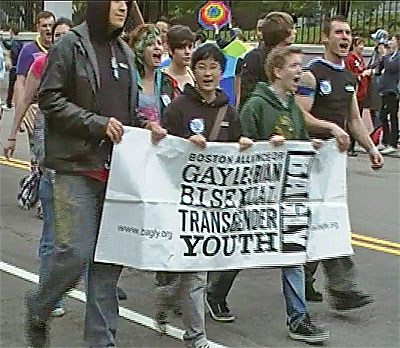 BAGLY adults and children at a Boston Youth Pride march.
 Scenes like this were unfortunately not surprising at the Youth Pride events we saw.
 This is what happens to boys when transgender activists get to them.
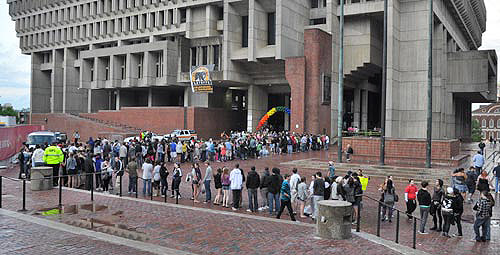 Kids from across the state wait to get into the "gay prom" (held inside Boston City Hall) at a Massachusetts Youth Pride.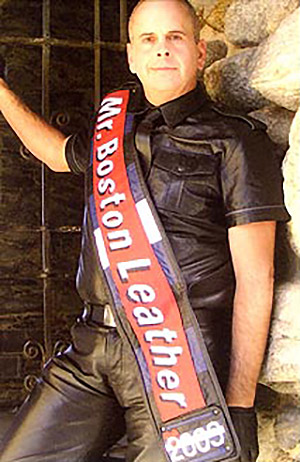
In 2009, "Mr. Boston Leather," who promoted BDSM, greeted kids with his "business card" as they entered the "gay prom" at the Youth Pride event. A few years later he died of AIDS.
 Inside the prom: Cross-dressing adults mingled with the kids.
Final thoughts
By the time parents find out the people and groups the GSA clubs have been leading their children to, it’s almost always too late.
The LGBT movement’s obsession with children – and the willing cooperation in this from school officials and other government officials – is a dangerous combination. It must become a top priority that this be completely stopped, and those involved be held accountable.


Please help us continue to do our uncompromising work!
Our successes depend on people like you.
Your support will make the difference!
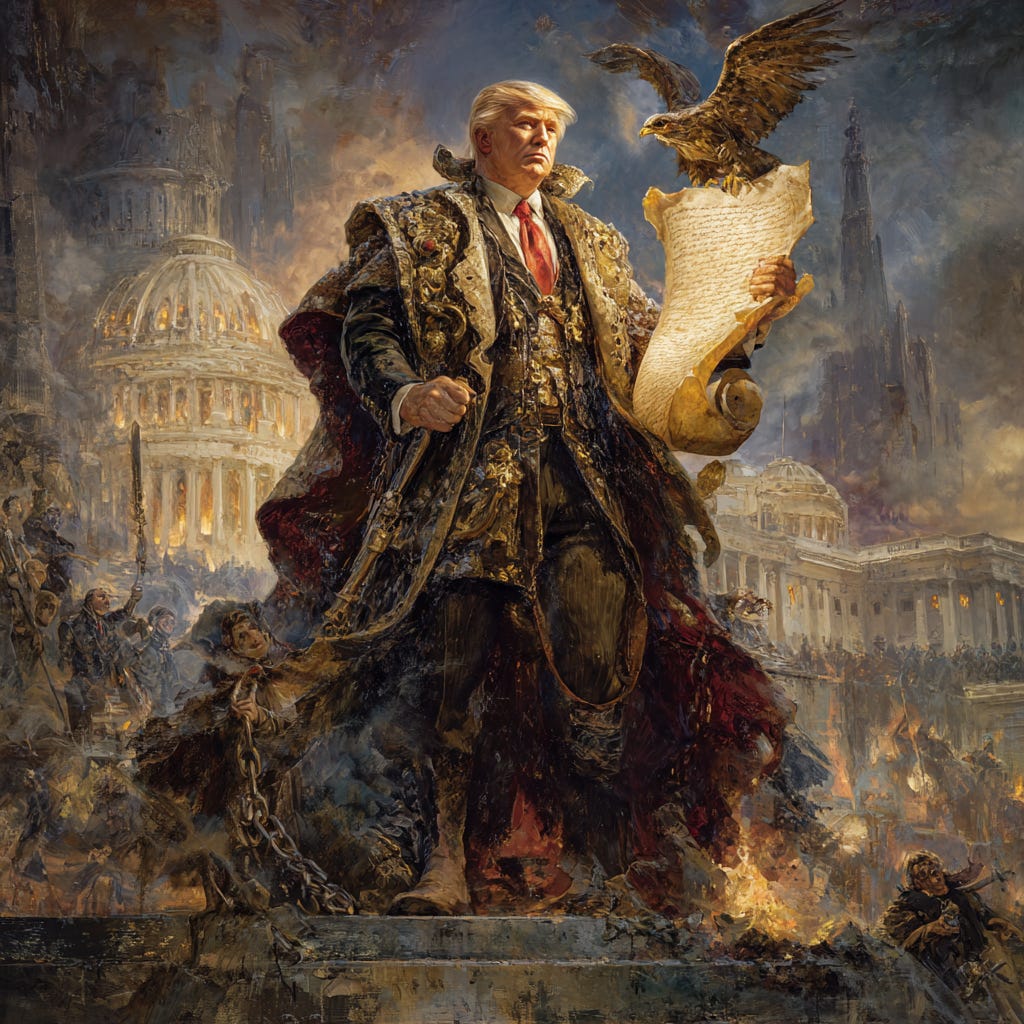
Dr. Scott Lively: Why I Stand with Trump and ICE
Why I Stand With Trump and ICE: We Need Temporary Strong Measures to Preserve Hope for a Restored American RepublicLike Cultural Chemo, Short-Term Autocracy is the Only Remedy for Late-Stage Marxism
The Warning of a Surveillance SocietyAs Leo Hohmann recently warned in his analysis of the Minnesota crisis and broader immigration enforcement trends: “A chilling show-your-papers society is taking shape right before our eyes, and ICE’s partnership with global data-collection firm Palantir is pushing it to the next level.” This observation strikes at the heart of a profound concern. What begins as targeted tools for securing borders and enforcing immigration law carries the grave potential to expand into routine domestic surveillance, compelling citizens to produce documentation in everyday contexts far removed from national security imperatives. Palantir’s advanced capabilities in data aggregation and analysis, already deeply integrated with ICE and other federal entities, exemplify how technology designed for efficiency can become the infrastructure of control when wielded without sufficient safeguards. The Hijacking of Freedom Under Cultural MarxismThis development fits within a larger, decades-long pattern in which American freedom has been incrementally hijacked and repurposed to advance a centralized system infused with Cultural Marxist principles. Barack Obama stands as the chief—though not the sole—culprit on the left in this scenario, having leveraged his presidency to accelerate the consolidation of power under a uniparty framework that prioritizes managerial consensus over constitutional limits. Institutions have been co-opted to promote collectivist uniformity, managed societal outcomes, and expanded state authority at the expense of individual liberty and self-governance. The left’s vision culminates in what I term “O-Stalinism”: a form of Marxist tyranny masquerading as utopia, where centralized control enforces ideological purity through surveillance, economic dependency, and cultural homogenization. The Adams Principle and the Failure of IncrementalismJohn Adams articulated the essential precondition for our system when he stated that the Constitution was made only for a moral and religious people, and is wholly inadequate to the government of any other. In an era where that shared moral foundation has been systematically undermined—replaced by leftist ideological conformity enforced through bureaucratic capture, cultural institutions, and technological means—the traditional niceties and incremental adjustments of republican governance no longer provide adequate protection for liberty. Entrenched forces within the administrative state, academia, corporate spheres, and even segments of law enforcement have become too embedded for piecemeal reform to dislodge them effectively. The Stark Binary: No Middle Ground RemainsObservers increasingly confront a stark binary: a Trumpian approach characterized by strong executive leadership—often described as quasi-monarchical in its reliance on decisive action, direct institutional confrontations, and America First priorities—versus an accelerating drift toward O-Stalinism under progressive centralization. There is no viable middle ground at this historical juncture; our society is too completely polarized, with victory emerging as a zero-sum game. Only one side can prevail, and only at the expense of the other—either through the dismantling of entrenched leftist structures or their further entrenchment at the cost of remaining freedoms. Advocates of the Trump model see his methods—aggressive border enforcement, economic nationalism, and bold challenges to bureaucratic overreach—as the sole viable counter to the consolidation of power observed in preceding periods. Temporary Strong Measures as a Remedial BridgeThis is not, however, a call for enduring autocracy. The debate persists: Does thorough restoration demand prolonged autocratic dismantling, or can electoral success combined with cultural renewal ultimately prevail? I maintain the hopeful view that any strong executive interventions required—however they may appear quasi-monarchical—must be temporary and purpose-limited. Their role is remedial: to dismantle the infrastructure of the Marxist collective that has proliferated within our institutions, secure functional borders, terminate policies that erode national unity, and reestablish impartial rule of law. The Path of Electoral and Cultural ReclamationWith that groundwork restored, the enduring strategy lies in sustained electoral and cultural reclamation. This entails returning to the values and aspirations of America’s golden years as the great Melting Pot—roughly the mid-20th century, prior to the cultural upheavals of later decades. That period featured assimilation grounded in a shared moral framework: the family as society’s foundational unit, ethics informed by faith as a common touchstone, government limited in scope and respectful of personal initiative, and immigrants integrated into a cohesive national identity rather than divided by multiculturalism. It was an age when self-reliance, responsibility, and civic virtue supported widespread prosperity and social cohesion. Achieving this reclamation demands persistent effort: securing consecutive electoral majorities to place leaders aligned with original constitutional principles, reforming education to convey accurate history instead of ideological constructs, strengthening family structures through supportive policies and cultural reinforcement, and cultivating a public discourse rooted in open reasoning rather than compelled uniformity. Trump’s decisive leadership can function as the necessary bridge—creating the security and latitude for these grassroots, organic renewals to take hold and endure. Acknowledging the Risks of the Chosen PathThat said, candor requires acknowledging the grave risks inherent in this path. There exists a real danger of sliding into right-wing totalitarianism, which would prove nearly as destructive as a fully realized left-wing version. Power concentrated in strong executive hands, even temporarily, can entrench itself if vigilance falters or if unforeseen crises provide pretext for permanence. If my longstanding views on prophecy prove accurate, such an outcome may be unavoidable in the broader trajectory of end-times events. The Final Choice: Restoration or Inevitable CollapseNevertheless, the Trump-aligned path at least preserves the possibility of American restoration—a return to constitutional self-rule under moral foundations—while the Marxist alternative offers only an inexorable descent into hell on earth, with no exit short of total societal collapse. In this hour of decision, I stand with Trump and the enforcement tools now in play, not out of blind allegiance, but because they represent the pragmatic, time-bound means to arrest decline and safeguard hope for the republic our founders intended. The window remains open, however narrow, for those committed to principled resolve and sustained renewal. To put it another way, like Cultural Chemo, short-term Autocracy is the only remedy for Late-Stage Marxism. The patient isn’t guaranteed to survive it, but the alternative is certain death. |
Subscribe to:
Comments (Atom)